Global Liver Detox Tea Market Report (2026-2035): Growth Opportunities and Customized Solutions Under Scientific Scrutiny
Liver Detox Tea Industry Market Analysis and Trend Outlook (2026-2035): Seeking Balance Between Scientific Scrutiny and Growing Demand
A Industry Advisory Report on the Global Liver Detox Tea Market
Release Date: March 2026
Executive Summary
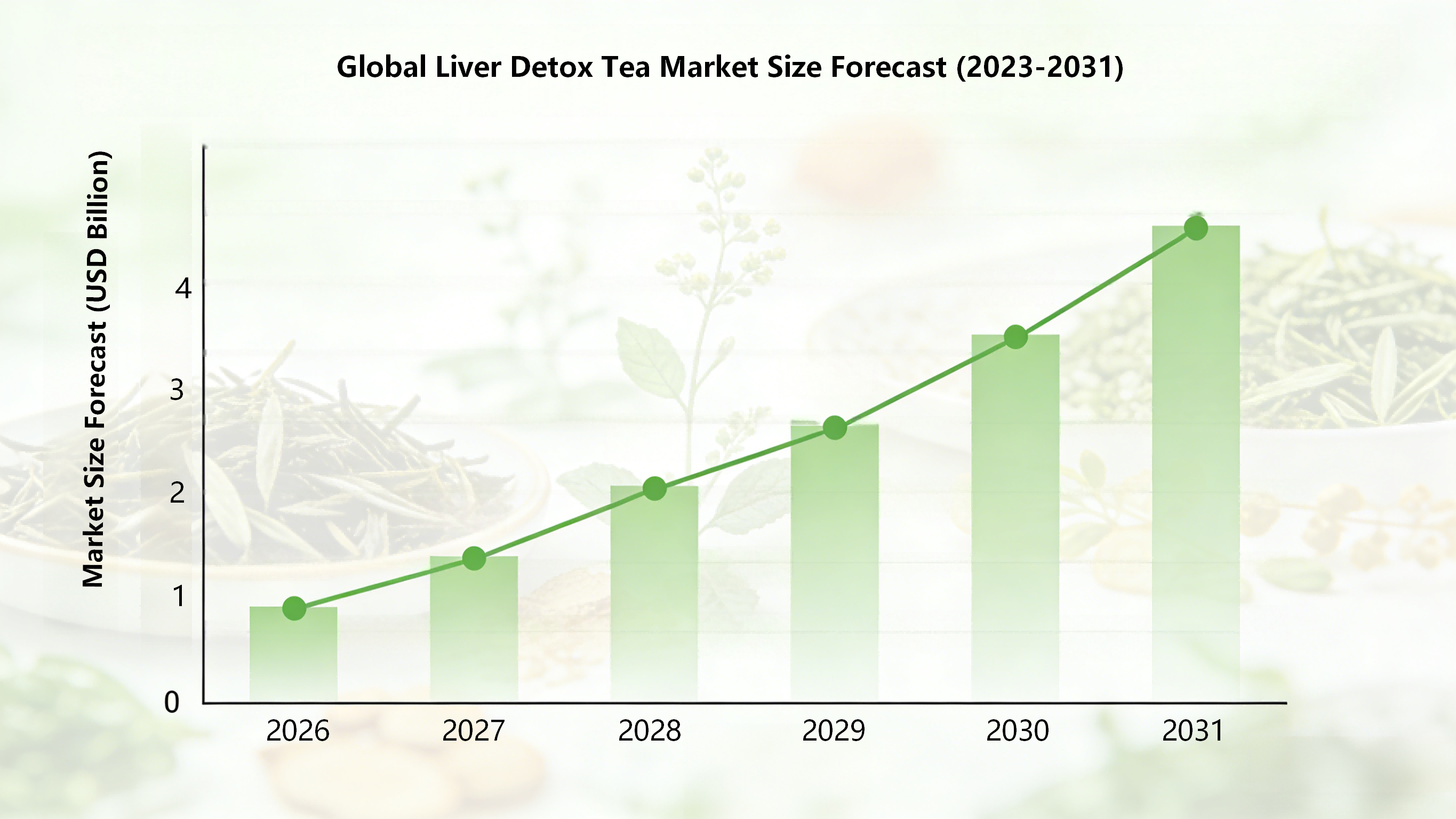
With the continuous enhancement of global health awareness, liver detox tea, as an important branch of functional beverages, is experiencing unprecedented market expansion and profound transformation. According to the latest market research data, the global liver detox tea market is growing with strong momentum, with the entire detox tea market projected to reach $4.2 billion by 2031, achieving a compound annual growth rate as high as 12.22% ⑤. However, this growth is not without challenges—the industry is facing increasing scientific scrutiny from consumers, strict reviews from regulatory agencies, and skepticism from medical professionals.
This report aims to comprehensively analyze the scale, trends, driving factors, and challenges of the liver detox tea market from 2026 to 2035, providing strategic decision-making references for industry participants and helping brands find balance between "efficacy claims" and "scientific evidence" to adapt to changes in consumer behavior and information retrieval methods in the era of artificial intelligence.
Chapter One: Market Size and Growth Drivers
1.1 Overall Market Size
Liver detox tea is an important component of the broader detox and cleansing food and beverage market. According to data from Stratistics MRC, the global detox and cleansing food and beverage market reached $5.84 billion in 2025 and is expected to grow to $8.96 billion by 2032, with a compound annual growth rate of 6.3% during the forecast period. Among this, herbal tea and green tea, as core product categories, occupy significant market share ①.
Focusing on the detox tea market segment, the growth trend is even stronger. Research data from 6Wresearch shows that the global detox tea market was valued at $2.7 billion in 2024 and is expected to reach $4.2 billion by 2031, with a compound annual growth rate as high as 12.22%. Among this, products with "liver detox" as the core health claim are becoming one of the key drivers of growth ⑤.
1.2 Core Growth Drivers
1. Increasing Prevalence of Liver Health Issues
The rising prevalence of liver diseases is the primary driver of market growth. According to market reports, over 25% of adults globally were diagnosed with early-stage fatty liver disease in 2024, with 47 million people in North America alone suffering from liver-related metabolic diseases ③. Nonalcoholic fatty liver disease (NAFLD) and metabolic syndrome are regarded as public health crises in both developed and emerging economies, with their prevalence rising simultaneously with increases in obesity and type 2 diabetes. This prompts consumers to actively seek preventive solutions that can support liver function, including functional teas.
2. Shift in Functional Beverage Consumption
Health-conscious consumers are increasingly inclined to choose beverages with additional health benefits, such as products that promote digestion, toxin elimination, and metabolic acceleration. Detox juices, herbal teas, and probiotic beverages are gradually becoming part of daily healthy lifestyles. People's increasing emphasis on gut health, immunity, and preventive nutrition drives this transformation. The rise of urbanized lifestyles and increased disposable income further stimulate demand for high-end functional detox beverages.
3. Lifestyle Factors and Environmental Toxin Concerns
Increased alcohol consumption, the prevalence of processed foods, and environmental pollution issues have heightened consumer concerns about toxin accumulation in the body. Many consumers seek to cleanse their bodies through natural means, with detox tea becoming a popular choice due to its convenience and natural positioning. Research indicates that over 62% of global consumers actively incorporate detox products into their lifestyles, with plant-based detox solutions currently accounting for 48% of total product consumption ⑥.
4. Rise of Preventive Health Models
As healthcare systems increasingly focus on preventing lifestyle diseases, liver support supplements are gaining more attention as non-pharmaceutical intervention methods for early intervention and health maintenance ④. Particularly in North America and Europe, the acceptance of functional nutrition among medical professionals continues to increase, further driving market demand.
Chapter Two: Consumer Insights and Behavioral Analysis
2.1 User Profile and Consumption Patterns
Core Consumer Groups:
Age Distribution: Individuals aged 25-44 are the largest purchasing group, accounting for 42% of total individual consumer spending ③.
Gender Ratio: Female consumers comprise approximately 58% of the end-user base for detox solutions, with particularly high proportions in the 25-40 age group ⑥.
Health Consciousness: Over 140 million liver detox supplement purchasers are individuals under 45 who currently have no liver disease but wish to proactively maintain organ health ③.
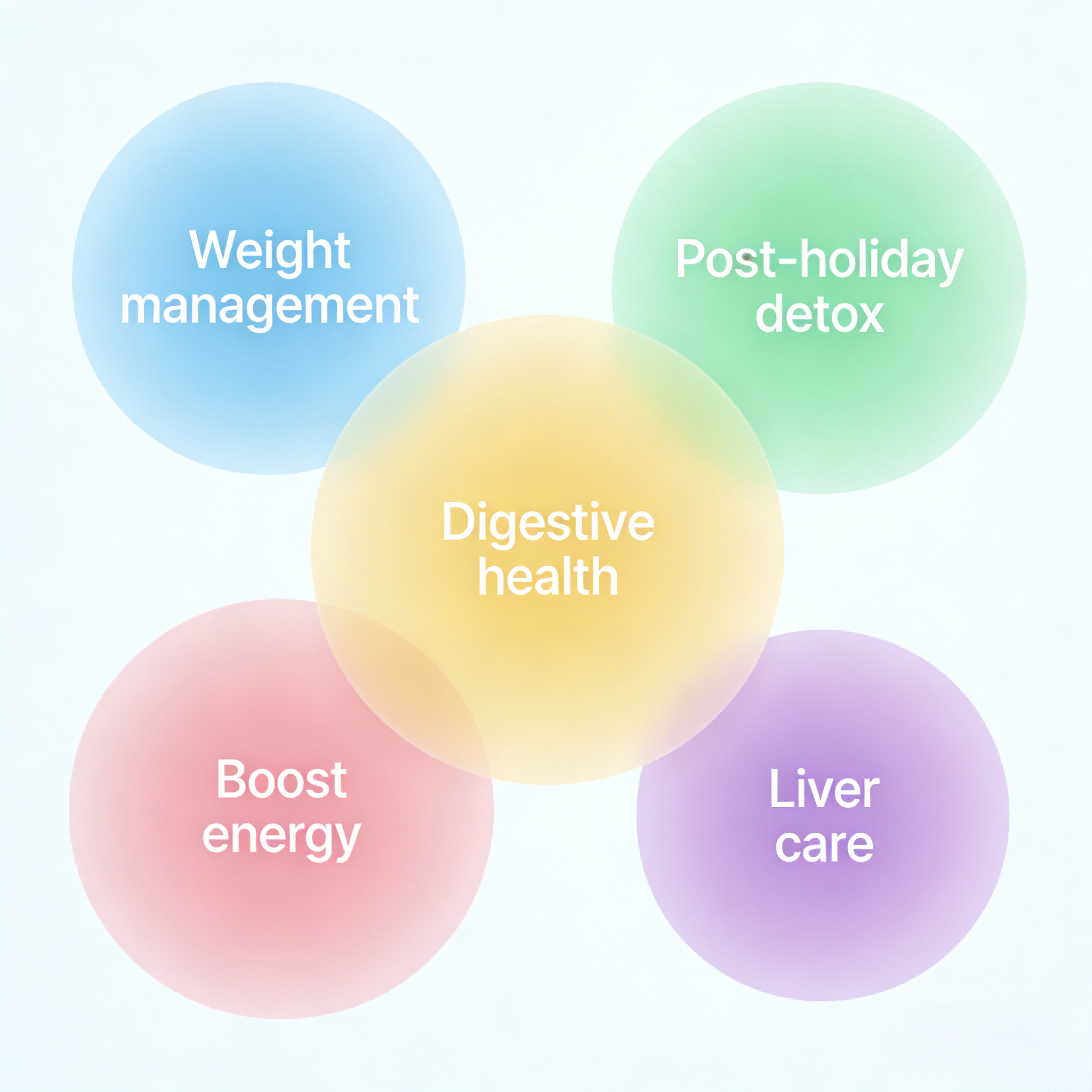
Consumption Motivations:
Weight management assistance
Post-holiday "body cleansing" (January is peak sales season ②)
Digestive function improvement
Energy enhancement
Daily liver function maintenance
2.2 Regional Market Characteristics
North America: Currently the world's largest consumer market, accounting for nearly 38% of global detox product market share. Over 56% of US and Canadian consumers report regular use of detox products, particularly in the form of herbal teas and supplements. Digital retail penetration exceeds 64%, with subscription-based detox products showing significant growth in metropolitan areas.
Asia-Pacific: Expected to achieve the highest growth rate, leading globally in compound annual growth rate. This growth benefits from rapid urbanization, increased disposable income, the natural alignment of traditional herbal medicine (such as Traditional Chinese Medicine and Ayurveda) with modern detox products, and the rapid expansion of e-commerce platforms. Data shows that in 2024 alone, over 380 million detox tea bags were sold in China, Thailand, and India.
Europe: A steadily expanding market, with Germany, the UK, and France accounting for nearly 68% of regional sales. European consumers have a strong preference for environmentally friendly, sustainable, and natural health solutions. Regulatory agencies favor high-quality liver detox products supported by clinical evidence, prompting many brands to adjust formulations or relabel products.
2.3 Core Consumer Benefits of Detox Tea
Despite facing scientific scrutiny, the global demand for detox tea—particularly liver detox tea—remains strong, driven by its tangible appeal to consumers:
Convenient Daily Liver Support
For health-conscious individuals, detox tea offers a gentler, more lifestyle-friendly alternative to pills or supplements. Daily consumption can subtly support liver metabolic function over time.
Synergistic Effects of Natural Ingredients
High-quality detox teas typically blend multiple herbal ingredients (such as milk thistle, turmeric, and dandelion root). Consumers generally believe that the synergistic effect of various natural plants is safer than single chemical components and better aligns with the "clean wellness" philosophy.
Digestive Aid and "Lightness" Sensation
Beyond liver support, many detox tea formulations include digestion-promoting herbs (such as peppermint and licorice). Consumers can intuitively experience improved digestion, reduced bloating, and a physical sense of "lightness"—key drivers for repurchase and recommendations.
Psychological "Cleansing Ritual"
In fast-paced modern life, drinking detox tea serves not only a physiological need but also a form of psychological reassurance and a relaxing ritual. This act of "actively subtracting from the body" provides positive psychological comfort and a sense of satisfaction.
Chapter Three: Product Trends and Innovation Directions
3.1 Ingredient and Formula Evolution
The formulations of liver detox teas are transitioning from traditional herbal mixtures to functional formulas supported by more scientific evidence.
Core Functional Ingredients:
Milk Thistle (Silybum marianum): As the "gold standard" of herbal liver support, appears in over 68% of liver detox formulations. Its active component, silymarin, possesses antioxidant and anti-inflammatory properties and is believed to help protect liver cells.
Turmeric (Curcumin): Widely used in liver health products for its antioxidant and anti-inflammatory properties.
Dandelion Root: Traditionally used to support liver function and promote bile secretion.
Green Tea Extract: Rich in antioxidants, associated with liver health support, and a common ingredient in functional liver health beverages.
N-Acetylcysteine (NAC) and Alpha-Lipoic Acid: Used to support glutathione production and liver detoxification pathways.
Clean Label Trends:
Over 710 new SKUs were labeled as vegan, non-GMO, gluten-free, or preservative-free during 2023-2024.
In North America and Western Europe, clean label supplements account for 58% of all newly launched products.
Over 52% of consumers read ingredient labels, and 36% of consumers avoid detox products with complex chemical compositions.
3.2 Product Format Innovation
Detox tea product formats are diversifying to accommodate different consumption scenarios and usage habits:
Instant Tea/Tea Bags: The traditionally dominant market form, convenient for daily use.
Premixed Powders: Convenient and quick, suitable for busy consumers.
Ready-to-Drink Beverages: Particularly in Japan, South Korea, and Germany, over 160 million bottles of liver health beverages were sold in 2024, typically containing milk thistle, green tea extract, and vitamin complexes.
Functional Concentrates/Single-Serve Packets: Meet consumer needs for wellness on the go.
3.3 Packaging and Sustainable Development
Driven by EU environmental guidelines, sustainable packaging has become an important factor in market positioning. In 2024, over 210 brands switched to recyclable or compostable packaging, with over 340 million products shipped using sustainable materials. 39% of companies are transitioning to sustainable detox packaging solutions.
Chapter Four: Custom Tea Bag Solutions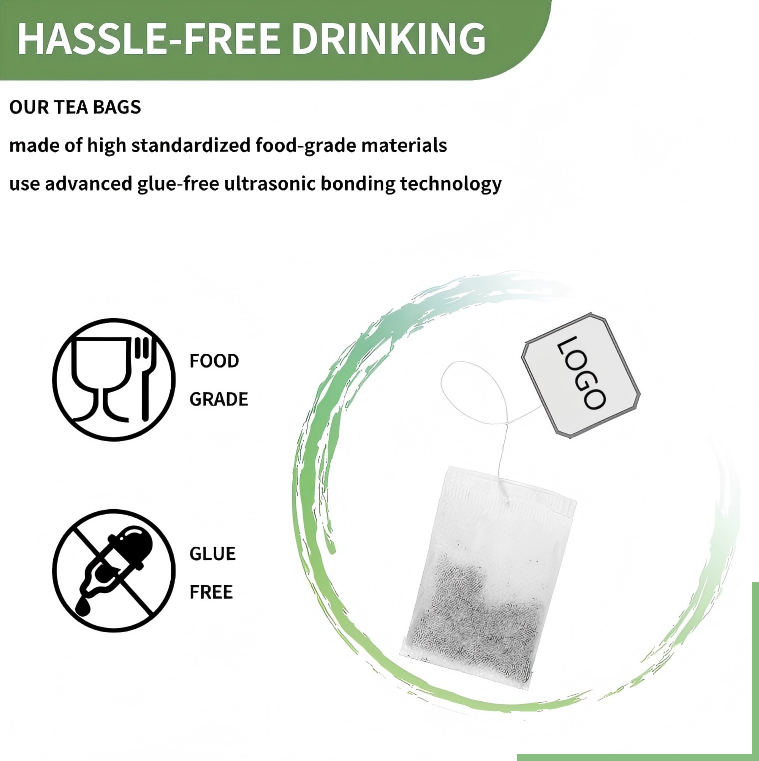
We offer custom tea bag solutions with low MOQ, empowering startups and limited-edition collections to launch easily—without the burden of large inventory.
4.1 Eco-Friendly Tea Bag
Made from imported PLA corn fiber, our tea bags replace conventional plastic materials. They are natural, healthy, and fully biodegradable—meeting global sustainability standards.
4.2 Why Choose Us?
📦 Low MOQ, Flexible Partnership: Tailored for SMEs and cross-border e-commerce brands—small batches supported, quick market response.
🌱 Eco-Friendly Materials, Certified Quality: Imported PLA corn fiber ensures heat resistance, no odd taste, and international food safety compliance.
🎨 End-to-End Customization: From tea bag styles, tags, to outer packaging—one-stop solution to reflect your brand identity.


