Why Can Supplement Samples Pass but Mass Production Still Fail? Key OEM Manufacturing Risks
HHC Bio-Industry Co., Ltd. | Supplement OEM Production & Process Control Insight
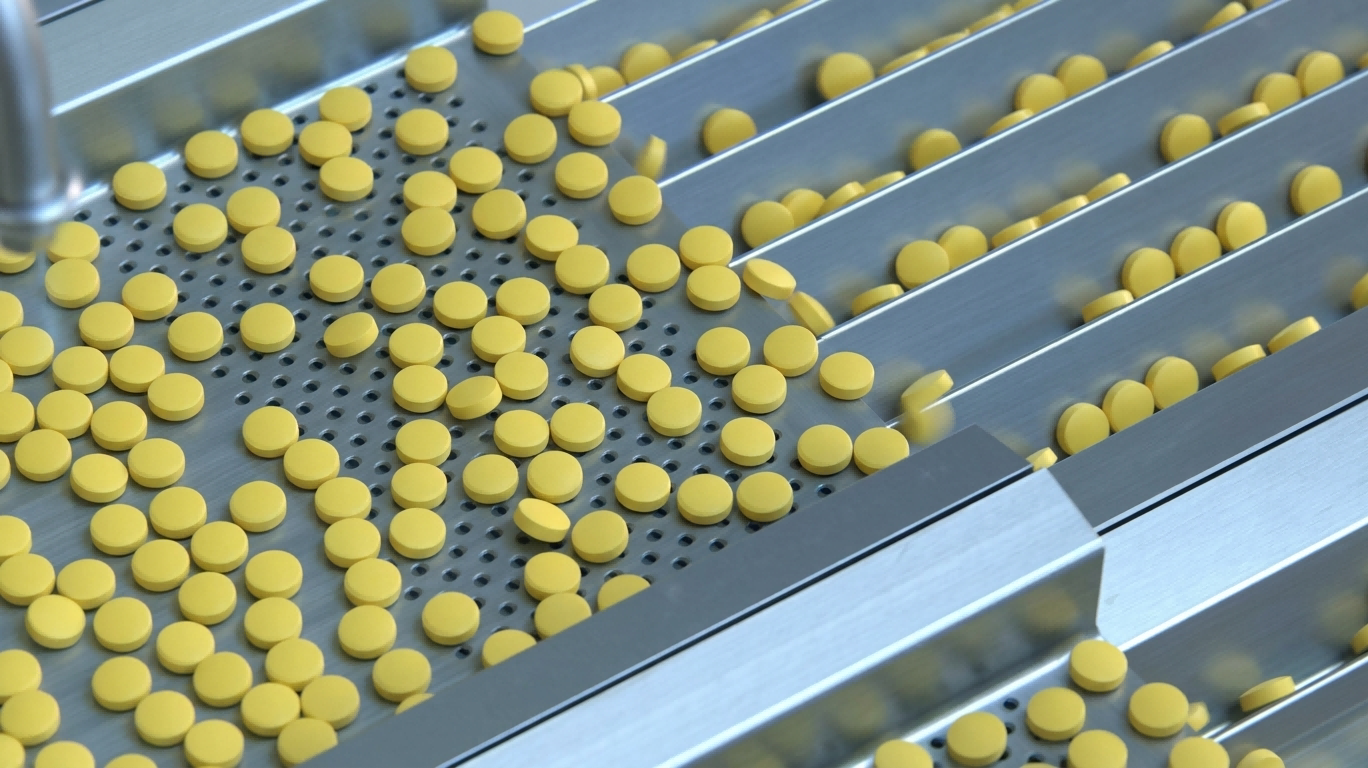
Many supplement brands worry about one thing when developing a new product: will the quality remain consistent when a sample is scaled up to thousands of bottles? In practice, successful sampling does not mean mass production will be identical in every detail, but it also does not mean mass production is more likely to fail. For most conventional supplements, production feasibility can usually be assessed by reviewing the formula, dosage form, and raw material specifications. When a product genuinely requires sampling, successful sample confirmation generally provides a solid basis for moving into mass production.
1. Does Every New Supplement Formula Need Sampling?
Some brands assume that every new product must go through sampling before a manufacturer can determine whether it is feasible to produce. However, many issues with conventional capsules, tablets, and powders can already be identified during formula review, including serving size, capsule fill weight, ingredient proportions, and suitability for the intended dosage form.
HHC-Healthy typically reviews the formula, dosage form, ingredient specifications, and target fill weight before deciding whether sampling is
necessary. For established formulas with clear manufacturing requirements, repeated sampling may not be needed. Sampling is more useful when certain ingredient properties, taste characteristics, or forming performance cannot be reliably assessed from documentation alone.
2. Why Can the Same Formula Require Different Process Considerations?
Some brands assume that keeping every ingredient quantity unchanged will automatically produce identical results. In reality, manufacturing performance also depends on factors such as particle size, density, flowability, and moisture sensitivity.
HHC-Healthy evaluates these factors alongside the ingredient specifications and intended dosage form. For example, powder flowability can
affect capsule filling, tablets require suitable compression characteristics, and gummies need a formulation that works with the intended forming process. Most of these considerations can be assessed before production rather than waiting for a problem to appear during mass manufacturing.
3. Is Manual Sampling or Machine Production More Consistent?
Small-scale sampling often involves more manual handling, while commercial production uses dedicated equipment and standardized operating procedures. Some brands worry that increasing production volume will automatically cause the finished product to differ from the approved sample. This is not necessarily the case.
After sample approval, HHC-Healthy selects suitable production equipment and establishes the relevant process parameters for the product. For a formula that has already been validated, machine production can often provide greater operational consistency and reduce variation associated with manual handling. When the formula, raw materials, and key manufacturing conditions remain unchanged, mass production can generally reproduce the approved product reliably.
4. Which Changes Could Affect Mass Production?
The more important consideration is often not the increase in production volume itself, but whether anything changes after the sample has been approved.
For example, changing a raw material supplier or specification, adjusting ingredient dosages, or modifying the dosage form or packaging requirements may affect the original manufacturing plan.
HHC-Healthy evaluates the potential impact of these changes on the formula, production process, and finished product quality.
When production follows the approved specifications, there is usually no need to redevelop the entire product. Communicating changes early also helps reduce unnecessary adjustments once manufacturing has started.
5. What Still Needs to Be Controlled After Sample Approval?
Sample approval confirms that the product meets the agreed requirements for characteristics such as appearance, taste, and specifications. Commercial production must still follow the applicable quality standards.
During mass production, HHC-Healthy focuses on raw material batches, production parameters, in-process controls, and finished product testing to verify that the product meets the approved specifications. Sampling and mass production serve different purposes: sampling confirms that the product meets expectations, while mass production applies the established process consistently and completes the required quality checks.
For brands, the priority is not to assume that mass production will suddenly fail, but to ensure that the final formula, raw material requirements, and product specifications are clearly defined before manufacturing begins.
6. How Can Brands Prepare for OEM Production?
Before requesting a quotation or placing an order, brands should prepare the complete formula, ingredient quantities per serving, target dosage form, raw material requirements, and packaging specifications. Any specific expectations regarding color, odor, taste, or other product characteristics should also be communicated in advance.
HHC-Healthy uses this information to assess manufacturing feasibility and determine whether sampling is necessary.
This approach helps avoid unnecessary trial runs and provides a clearer basis for subsequent production.
Supplement OEM manufacturing does not require repeated sampling for every product. In many cases, formula review can answer most feasibility questions in advance. For products that genuinely require sampling, once the key requirements have been confirmed, standardized machine production can often deliver even greater consistency. For brands, working with a manufacturer that can assess feasibility early, recommend sampling when necessary, and manage production properly is more valuable than assuming that scaling up will automatically create problems.
📩 Are you looking for a reliable OEM partner?
Click “Contact Us” in the right-hand sidebar to connect with HHC-Healthy.
HHC Bio-Industry Co., Ltd.
📧 Email:lisa@hhc-healthy.com
🌐 Website:www.hhc-healthy.com


